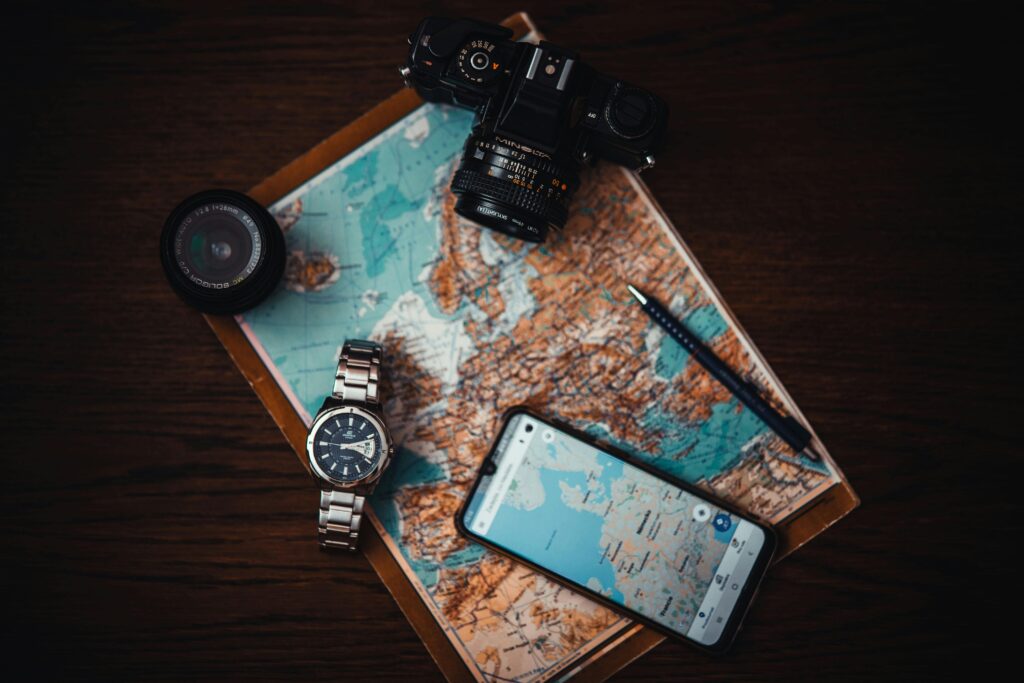
For many of us, our smartphones play a dual role in our lives. On one hand, they serve as an essential tool for productivity—a portable workstation containing all the functions needed to get the job done. On the other hand, they’ve increasingly become a one-stop entertainment shop, where we can watch, play, and socialise on the go.
Despite productive intentions, it’s easy to get swept away by one rogue swipe that turns a simple task into yet another scrolling session (speaking from experience, unfortunately). I like to compare this to having an office that also doubles as a theatre, trampoline park, and your go-to hangout spot. Not exactly a conventional or practical work environment.
That’s where those old-fashioned analogue tools come into their own. While not as “smart” and missing out on the artificial intelligence hype, these simple items may be the key to powering your digital detox.
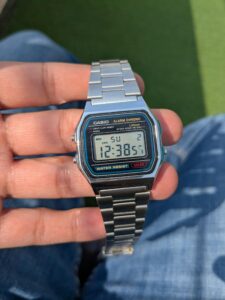
The classic wristwatch
Sometimes you just want to know the time, and in an age where your watch can also show notifications, music, and fitness stats, it’s refreshing to go back to that classic 1990s Casio. Looking for a more sophisticated look? There are countless options to suit your vibe.
Experts estimate that the average person checks their phone 144 times a day. Assuming you spend eight hours asleep, that’s one glance at your phone every 6.5 minutes! An easy way to bring that number down is by wearing a simple watch, with the added benefit that those pesky notifications can’t turn your 5-second glance into a 5-minute scroll.
The paper diary & calendar
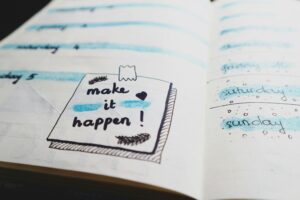
In my experience, going back to the familiar pen and paper has worked wonders in managing my disorganised schedule. Aside from the obvious benefit of keeping you away from digital distractions, a key advantage is that everything is easy to read and simple to access. Going over your diary at the end of the day or first thing in the morning can be a fantastically productive routine, and you can scribble away notes to your heart’s content.
They come in every size, shape, and colour imaginable, so you’ll have no trouble finding one that feels just right.
A real camera
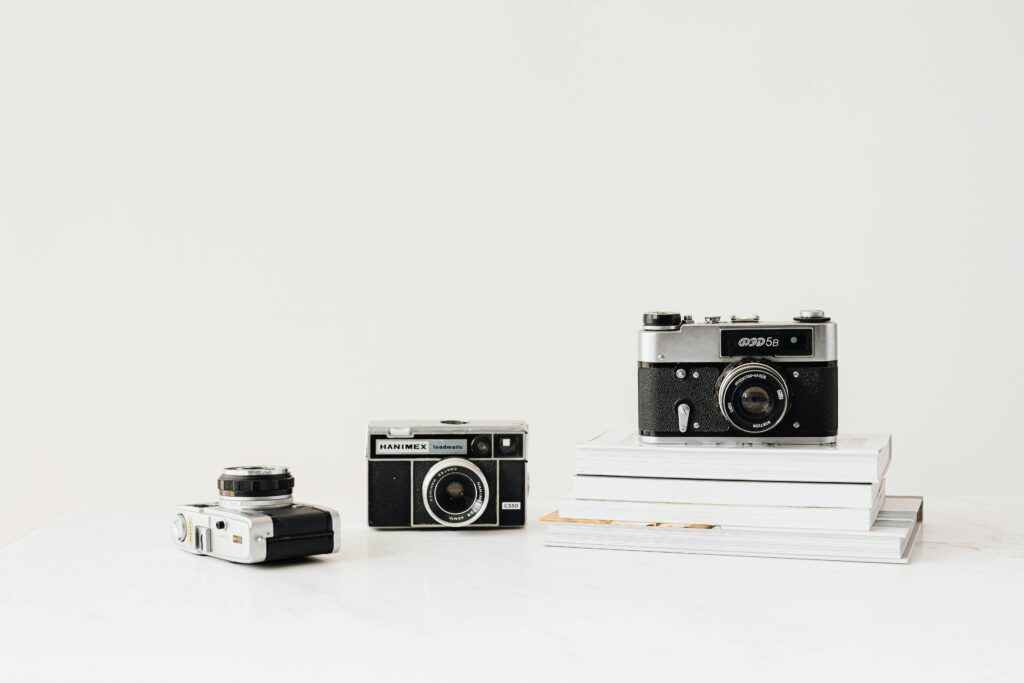
None of that smartphone happy snapping. The feeling of a physical camera in your hands is a great way to get the creative juices flowing, and you’ll find yourself putting more thought into the moments you capture. If your camera roll is anything like mine, you’ve likely got thousands of photos you’ll never look at again. Memory-making is a game of quality, not quantity—and this is where a tool purpose-built for the job starts to shine.
Of course, your modern camera is far from analogue, but it does get you off your phone and encourages a more intentional approach. Besides, if you’re insistent on going back to the basics, the classic Kodak is great fun and will never go out of style.
Books (the paper kind)
The digital world is awash with more information than we could could ever hope to access, but did you know research has shown our comprehension and retention to be signficantly stronger when we read off a physical page? If learning is your jam, getting back into those university textbooks may be the secret to your success.
Reading from a real book is a wholistic experience – the rustle of the pages, the texture of well loved covers, the smell off old paper. It’s a fun, relaxing antidote to your digital overload—just don’t forget to check the time now and then; books have a sneaky way of pulling you into another world and making the hours disappear.

Physical Maps
Getting lost—on purpose—might be one of the best things you can do for your brain. Physical maps are a great way to explore without relying on GPS, and they encourage you to be more present and observant of your surroundings. Instead of following a blue dot on a screen, you’re tracing your path, noticing street names, landmarks, and maybe even discovering places you wouldn’t have found otherwise.
Of course, Google Maps has its place—and I’m not suggesting you break out the old road atlas when you’re running late for an appointment. But if you’re looking to add a little sprinkle of adventure to your everyday routine, this might just be the perfect way to do it.

Go forth and detox!
Unplugging doesn’t have to mean off-the-grid. Sometimes, all it takes is swapping a few digital conveniences for tactile, focused alternatives. These analogue tools remind us that not everything needs a screen—and that’s exactly the point.